
PREAMBLE
Bill Of Transparency and Accountability For Disability Applications
Whereas as of 2024 the SSA receives approximately 2 million applications for disability annually, and the SSA cites a process of 6-8 months to receive a determination as to whether the applicant is eligible or ineligible for benefit payments. However the process can take up to 18 months or more before receiving an initial determination at the D.D.S. level even when the applicant has a listed impairment that qualifies them for disability payments, with corroborating medical documentation. During this time the applicant is unable to work and may have no source of income to sustain their basic livelihood, or even pay for prescribed medications. In addition to such financial, and even medical stress is the mental and emotional stress of an applicant not knowing if they will be approved for benefit payments, what time frame or process in which such a decision is made. It is not uncommon for an applicant to call a field office or a D.D.S. office to inquire the status of their application after 6 months of submitting that application, and be told it’s in pending status. This same exchange can happen again after another 6 months of waiting, with no detailed information about the nature of the delay or the applications position in the determination process.

Do you Know ?

Judy Chamberlain
After being hospitalized in 1966 for severe depression, Judy was introduced to the harsh realities for mental health patients. Prison-like facilities and a lack of patients rights. She became a fierce advocate for mental health reform pushing for patient rights to choose their course of treatment. Her civil rights work, affirmed the humanity of those with mental health challenges, while embarking on a movement she called "Mad Pride".
SECTION 1
The Bill of Transparency and Accountability for Disability Applications proposes means to give the applicant visibility of their application in the determination process, implement accountability measures for persons involved and to potentially expedite the determination process at large.
Subsection A: Bill proposes a flowchart that illustrates the position of the application in the determination process, as well as text, regarding nature of any delays, request for missing information, and any actions required of the applicant for the application to move forward in the process.
Subsection B: Bill proposes a timeline for applications in which the applicant has a listed impairment with medical proof to verify, of 8 months to conclude a determination after entering the intake stage. sample
Subsection C: Bill proposes to assign a numerical value to an application representing its position at every stage of the determination process, from intake to final determination.
Subsection D: Bill proposes to disclose persons, case workers, field office administrators, and their related duties to the determination process, by employee I.D. number. Viewable online to the applicant.
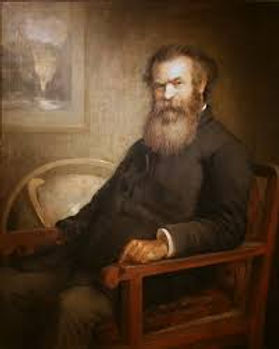
John Wesley Powell
Was an American geologist and explorer. After losing an arm in the civil war as a union soldier he pursed his interest for geology and science, eventually leading the first government sponsored passage through the Grand Canyon. He is most known for his expeditions along the Green River and Colorado River. Became the first director of the Bureau of Enthology for the Smithsonian Institute..

Franklin D Roosevelt
The 32nd President of the U.S. being the only to serve more than two terms. Impacted by the Great Depression and World War 2, Roosevelt aggressively implemented various legislative policies that collectively became known as the "New Deal" Some of the elements of the "New Deal" are Social Security and Security Exchange Commission. Many people are unaware that Roosevelt, lost the use of his legs due to Polio in 1921, years before becoming President.
Join the group
SECTION 2
Bill proposes tenants that will prioritize certain applications to be processed expeditiously based on strong work history independent of the open end interpretation process of recoding. The justification for this provision is that applicants with a strong work history indicate a smaller risk of fraudulent or frivolous claims.
Subsection A: Applicants who qualify for high priority processing based on work history are:
* Applicants who have worked for 1 company for 15 years or more in the past 20 years prior to the onset of disability, with each year totaling an average gross between 40000-90000. Also must not have any periods of unemployment lasting more than 30 consecutive days or 45 days in one year.
* Applicants who have been single parents for 10 or more years with no income from alimony or child support who have a work history of 15 years or more prior to the onset of disability, in which each year totals an average gross between 40000-90000.
* Applicants who have a work history of 20 or more years prior to the onset of disability, in which the total years average an annual gross between 40000-90000, with no periods of unemployment lasting more than 30 consecutive days or a total of more than 45 days in one year.
SECTION 3
To shore up the volume of applications In manageable numbers, the bill will enact quarterly intake periods.
Subsection A: Intake periods will happen quarterly throughout the year, in the months of February, May, August, and November. The intake period will begin on the second week of the aforementioned months and end on the 3rd of the following month. This will allow periods in which administration can distribute priority respectively to a fixed volume of applications.

Tara Flood
Being born without forearms Tara faced the challenges of discrimination and ignorance throughout her early life. Water became her sanctuary. She learned to swim as a child and swam all the way to Barcelona. In 1992 at the Paralympics she set a new world record for the breaststroke taking home a gold medal. Now she makes waves as a co-head of the Hammersmith and Fulham Disabled Peoples Commission in London. The commission started the " Nothing about Disabled people Without disabled people report, which advocates for disabled people to be involved in the decisions for policies affecting their lives.
SECTION 4
Bill will create from the house of representatives a small oversight committee to improve transparency, accountability, and to provide specialized resources for departments involved in the determination process.
Subsection A: Oversight committee will:
* Create guidelines and metrics for case worker performance based on history of the determination process and volume of applications for an intake period.
* Appropriate specialized resources that are deemed necessary for a specific situation, such as securing funding for a third party to make phone calls to verify employment history or medical information.
* Will create and enforce punitive action for poor case worker performance.
* Will ensure the integrity of the determination process by ensuring online communication with applicants, is consistent and timely.
* Will conduct annual audits of selected case workers, to evaluate performance.
SECTION 5
To help fund the cost of new transparency and accountability measures. Bill will enact an application fee of 250 dollars, of which 50 dollars will be charged upon the submission of the application and 200 dollars charged upon first pay out of benefits, if approved. If application is denied then the applicant is only charged 50 dollar submission fee.
Subsection A: If a determination is not made in cases where the applicants disability falls under the list of impairments with corroborating medical proof, within 8 months the fee shall be waved and the application will continue to be processed unto final determination.
DEFINITIONS
* Determination: A decision made by an SSA official concerning an application, that impacts its status to qualify the applicant eligible or ineligible for benefit payments.
* Accountability Measures: Rules, guidelines, tenants, and any other material expressly employed for the purpose of making the determination process, its functions, renderings and persons involved more visible and accountable to the SSA, applicants and oversight committee.
* Open end Interpretation: The function in which officials assess a value of regulation bases codes to current trends in disability applications, to make them apply effectively based on program cost.
* Applicant: Persons applying for disability benefits, whether by mail, in person, or online.
* Specialized resources: Resources not apart of day to day administrative operations but may be rendered necessary for a specific purpose for a short period of time. Such as hiring a third party to make calls to medical officials. Or hiring a software programmer, to create software that will help categorize applications.
* Intake Period: The period of time in which, applications for disability can be submitted to the SSA, online, in-person, or by mail.

Rick Hansen
A childhood accident in the back of a pick up truck left Hansen bound to a wheelchair but not bound to small dreams. His love for sports and the outdoors stayed in tact. Becoming an olympic marathoner he took home gold 3 times from 1980 to 1984, won 19 international championships with 3 world championships. However Rick is known mostly for his "Man in Motion Tour". An amazing effort to showcase the potential of disabled persons if there were no barriers. Rick wheeled from 12 hours a day for an average of 52 miles for 26 months across 34 counties. The incredible feat raised more than 26 million dollars for the removal of barriers for disabled persons and to raise awareness. 40 Years later the Rick Hanson foudation is still advocating to improve the life of those with disabilities.

Geraldine Lawhorn
She became the first deaf blind African American to earn a college degree at 67 years old. In spite of losing her sight and hearing due to childhood illnesses she persevered to become a public speaker, theatre performer and learn piano through sound vibrations and Braille. Among her literary works are 3 books, "On Different Roads: An Autobiography, Petals of View, and While it is day.

Dustin Dart Jr
Known to many as the Godfather of the ADA {Americans with Disability Act} of 1990. He came from a wealthy family being the grandson of Charles R. Walgreen founder of Walgreens and his father Dustin Sr, president of Dart Industries. However the swanky life did not stop him from stepping into the grassroots of activism Dart himself disabled due to polio embarked on a two national tours called {The Road to Freedom} meeting with local and state advocates with disabilities. Eventually his efforts led to sustained awareness and dialogue concerning disability reform and a national policy that became the draft for the ADA.
Join the group

Every Voice Counts
